Wednesday, March 3, 2010

You dodged a bullet


Meaning
If someone has dodged a bullet, they have successfully avoided a very serious problem.
To narrowly avoid an unwelcome, harmful, or disastrous outcome or occurrence


Sources
http://www.usingenglish.com/reference/idioms/dodge+the+bullet.html
http://www.merriam-webster.com/dictionary/dodge+the+bullet
https://blogger.googleusercontent.com/img/b/R29vZ2xl/AVvXsEgn75Uz5-nCyHDz6_DgJoYcVeEVAHXsHPFPHU5LXRVK25ReCVcEEeq1CiRWMOzxticIk_idx9gsLNhK0wQoT_nUWnDfJqxbBNz3zxH6cIDBuymkTPiXOfCRit3lKrorY_Fgl-VMBkkovmYC/s320/dodged+a+bullet.jpg
http://blog.therealcostarica.com/wp-content/uploads/2009/04/whew.jpg

Beating a Dead Horse


Meaning:
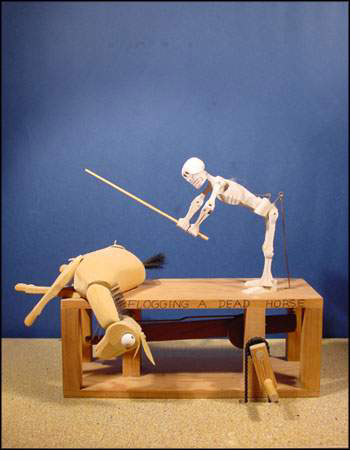
If someone is trying to convince people to do or feel something without any hope of succeeding, they're beating a dead horse. This is used when someone is trying to raise interest in an issue that no-one supports anymore; beating a dead horse will not make it do any more work.
"Flogging a dead horse", (alternatively "beating a dead horse") is an idiom that means a particular request or line of conversation is already foreclosed or otherwise resolved, and any attempt to continue it is futile.

Origin:
The first recorded use of the expression with its modern meaning is by British politician and orator John Bright, referring to the Reform Bill of 1867, which called for more democratic representation in Parliament, and about which Parliament was singularly apathetic. Trying to rouse Parliament from its apathy on the issue, he said in a speech, would be like trying to flog a dead horse to make it pull a load.

John Bright

Sources:
http://www.usingenglish.com/reference/idioms/beating+a+dead+horse.html
http://en.wikipedia.org/wiki/Flogging_a_dead_horse
http://swittersb.files.wordpress.com/2009/10/dead-horse.jpg
http://domain1041943.sites.fasthosts.com/holyoake/images/j_bright_1.jpg

Tuesday, March 2, 2010

I Bruise Like a Peach


Meaning:
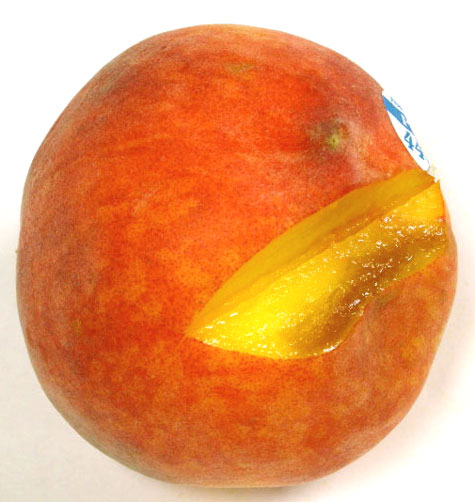
A peach often develops a bruise very easily, just from a little touch. It's the same meaning for a person. If they get a little bump on the arm, they often develop a bruise.
A peach discolors when it is handled roughly. Because peach flesh is soft, it is easily bruised. To bruise like a peach is to quickly and pointedly bruise.

Origin:
The quote "But, but... I bruise like a peach!" is from legendary 80s Van Damme kickbox-a-thon “Bloodsport“, though curiously it has not been deemed a memorable quote by the powers-that-be at IMDB.

Sources:
http://www.englishforums.com/English/BruiseLikeAPeach/vqjqv/post.htm
http://hideyourarms.com/2006/05/24/but-but-i-bruise-like-a-peach/
http://www.ipt.us.com/wp-content/uploads/2009/07/peach-bruise.jpg

Wednesday, December 23, 2009

I Only Have Eyes For You


Meaning:
to be interested in or attracted to only one person

Origin:
“I Only Have Eyes For You” is the name of a song that was made popular in the spring and summer of 1959 by a group called the Flamingos. The song was actually written for a film in the 1930s, and it had a popular run at the music charts at that time.

The way the song was NEVER meant to be sung:


Sources:
http://idioms.thefreedictionary.com/only+have+eyes+for
http://www.pophistorydig.com/?tag=the-flamingos%E2%80%99-%E2%80%9Ci-only-have-eyes-for-you%E2%80%9D

Tuesday, December 8, 2009

The Apple Doesn't Fall Far From the Tree


Meaning:
A child grows up to be very similar to its parents in the way they act and in their physical abilities.

This picture is titled "The Apple Doesn't Fall Far From the Tree".
It's a little freaky, don't you think?

Origin:
One site says this phrase came from Sir Isaac Newton. I think this might be a joke.
The earliest German citation of the phrase stems from 1582 when it is quoted by Johann Fischart in his novel Geschichtsklitterung precisely as "Der Apffel fellt nicht weit vom Baum". By 1585 the proverb appears in Michael Neander's important German proverb collection Ethice vetus et sapiens as "Der Apffel fellt nicht gerne weit vom Baume". And by 1598 the German chapbook entitled Das Lalebuch (Die Schildbºrger) includes the common variant "Der Apffel felt nicht weit vom Stammen", where the "Baum" (tree) has been replaced by "Stamm(en)" (stem). The German proverb is thus well established by the end of the 16th century, and it appears with considerable frequency in later collections and literary works of the German language right up to the present day.

Webfetti.com


Sources:
http://en.wiktionary.org/wiki/the_apple_doesn%27t_fall_far_from_the_tree
http://wiki.answers.com/Q/Where_exactly_does_the_quote_the_apple_doesn%27t_fall_far_from_the_tree_come_from
http://www.deproverbio.com/display.php?a=3&r=6

All That Glitters Is Not Gold

Meaning:
A showy article may not necessarily be valuable.
Not everything is what it seems.

Origin:
The original form of this phrase was 'all that glisters is not gold'. The 'glitters' version of the phrase long ago superseded the original and is now almost universally used.
Shakespeare is the best-known writer to have expressed this idea. The original Shakespeare editions of The Merchant of Venice, 1596, have the line as 'all that glisters is not gold'. 'Glister' is usually replaced by 'glitter' in renditions of the play:
MOROCCO:
All that glitters is not gold;
Often have you heard that told:
Many a man his life hath sold
But my outside to behold:
Gilded tombs do worms enfold.
Had you been as wise as bold,
Young in limbs, in judgment old,
Your answer had not been inscroll'd:
Fare you well; your suit is cold.
The Bard was by no means the first to suggest that 'all that glitters/glisters is not gold'. The 12th century French theologian Alain de Lille wrote "Do not hold everything gold that shines like gold". In 1553, we have Thomas Becon, in The relikes of Rome:
"All is not golde that glistereth."
George Turberville, in Tragical tales, (and other poems), 1587, wrote that
"All is not gold that glistringly appeere."
The 'glitters' version of this phrase is so long established as to be perfectly acceptable - especially as 'glisters' and 'glitters' mean the same thing and are essentially synonymous. Only the most pedantic insist that 'all that glisters is not gold' is correct and that 'all that glitters is not gold', being a misquotation, however cobweb-laden, should be shunned. John Dryden was quite happy to use 'glitters' as long ago as 1687, in his poem, The Hind and the Panther:
For you may palm upon us new for old:
All, as they say, that glitters, is not gold.
Sources:
http://www.phrases.org.uk/meanings/28450.html

Friday, December 4, 2009

Pride Goeth Before a Fall


Meaning:
The actual Bible verse (King James version) is "Pride goeth before destruction, and an haughty spirit before a fall." It means that the next step after being all puffed up with arrogance could be falling flat on your face. Well, according to what I know, 'Pride comes before a fall' means that one becomes over confident and stops thinking sensibly when success goes to one's head and which is a sure indication of the fact that that person is bound to suffer or face disappointment because of the wrong decisions that he or she might make. In other words too much arrogance and self pride are sure to bring bad and disappointing results.

Origin:
The proverb comes from the Old Testament - Proverbs 16:18 "Pride goeth before destruction, and an haughty spirit before a fall."
Herman Melville rendered essentially the modern version in 'The Piazza Tales' (1856).

Sources:
http://wiki.answers.com/Q/What_does_%27Pride_comes_before_the_fall%27_mean
http://kingjbible.com/proverbs/16.htm
http://www.phrases.org.uk/bulletin_board/32/messages/1321.html